
Pointe Coupee Parish Arrest Records and Charges
Arrest records start with the Pointe Coupee Parish Sheriff's Office or another arresting agency. They may reflect the person taken into custody, the arrest or booking event, the agency involved, and the request path for a report or booking-related record. The sheriff's official public-documents page is important because it links the public-records request form used for sheriff-held material. That path is separate from the Clerk of Court's criminal case file.
Charges after arrest begin when the 18th Judicial District Attorney decides what, if anything, to file in court. The 18th Judicial District Attorney prosecutes felonies in Pointe Coupee, Iberville, and West Baton Rouge, and most sheriff or State Police misdemeanors, including many traffic citations. The Clerk Criminal Department then maintains bills of information, indictments, motions, subpoenas, notices, minutes, trial evidence, and appellate records. For current custody, use the Pointe Coupee Parish inmate records page.
The Sheriff's public-documents page is the official source for the request-form path shown here.
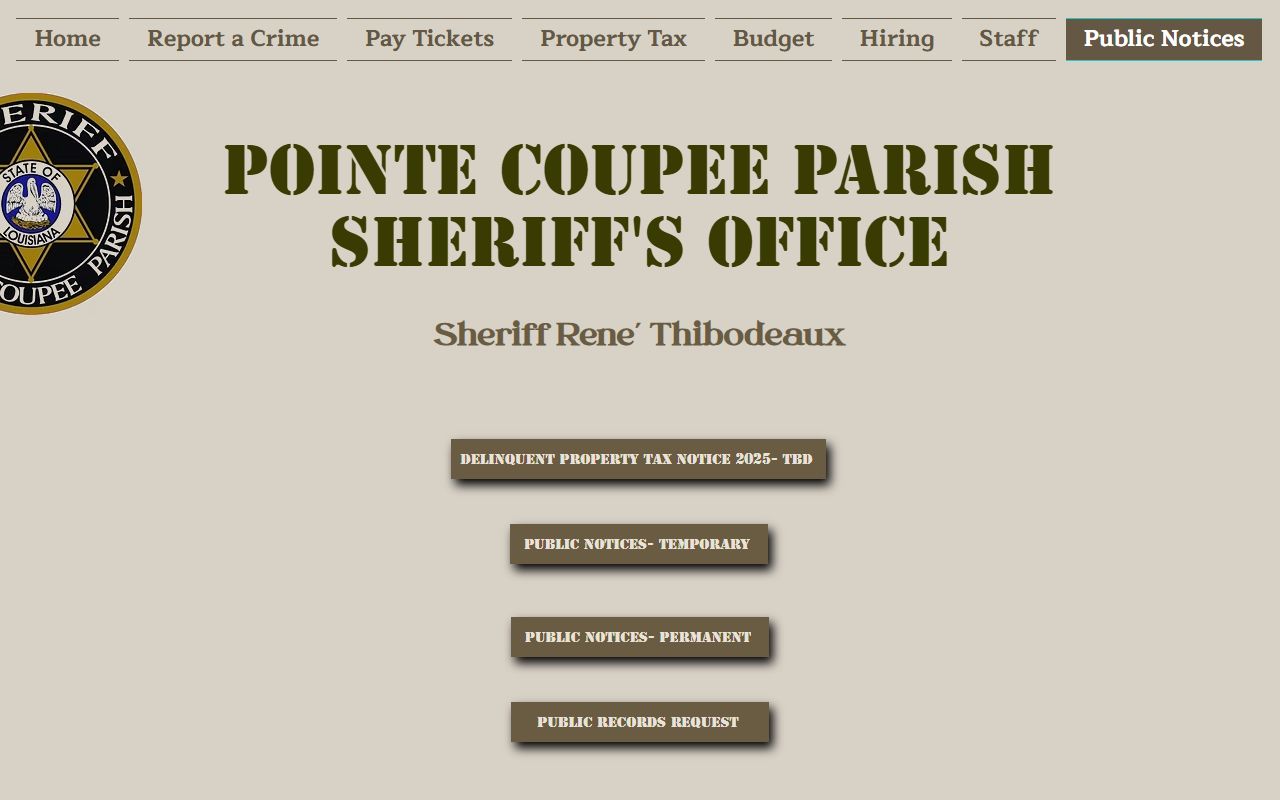
That sheriff channel is useful for reports and law-enforcement copies, while court charges must still be checked through the court and prosecutor path.
Search Pointe Coupee Parish Arrest Records
Pointe Coupee does not have one public screen that joins every arrest, booking, charge, and outcome. A complete search uses the correct source for each stage. Start with the jail roster if the concern is current custody, use the sheriff request form for reports or official copies, and use ClerkNet or the Clerk Criminal Department for filed charges in a court case. ClerkNet is account, terms, and subscription gated, and static inspection did not expose full case fields.
- Check the Pointe Coupee LAVNS jail roster for current custody or release-notification options.
- Use the PCPSO public-records request form for incident, accident, report, scan, certification, or media copies.
- Search or request the court case through ClerkNet or the Clerk Criminal Department when a bill of information, indictment, motion, minute, or disposition is needed.
- Contact the 18th JDA when the issue is a pending charging decision, traffic pretrial request, or expungement guidance.
- Confirm restricted or redacted records with the source agency because juvenile, sealed, expunged, and active investigative records may not be public.
For the full case file after charges are opened, including pleas, disposition, sentence, and appellate-record material, use the Pointe Coupee Parish criminal court records path instead of relying only on an arrest record.
Pointe Coupee Parish Charging Documents
The charge record is built from the filing instrument. Louisiana criminal cases commonly use a prosecutor-filed bill of information or a grand-jury indictment, while citations and summonses may appear for some matters. The research did not confirm a public sample from ClerkNet, so the table below uses the research file's Louisiana district-court framework and the Clerk's listed Criminal Department materials.
| Document | Who Uses It | What It Does | Pointe Coupee Access Path |
|---|---|---|---|
| Bill of information | District Attorney | Files formal criminal counts without a grand-jury indictment. | Clerk Criminal Department or ClerkNet, if accessible. |
| Indictment | Grand jury | Accuses a defendant by grand-jury action, often in serious felony matters. | Clerk Criminal Department after filing. |
| Citation or summons | Law enforcement or court process | Starts or documents a required appearance for some traffic, misdemeanor, or lower-court matters. | DA traffic channel, Clerk, sheriff, or relevant JP court. |
The Louisiana R.S. 44:3 source page is also relevant because it addresses law-enforcement and prosecutive record limits.
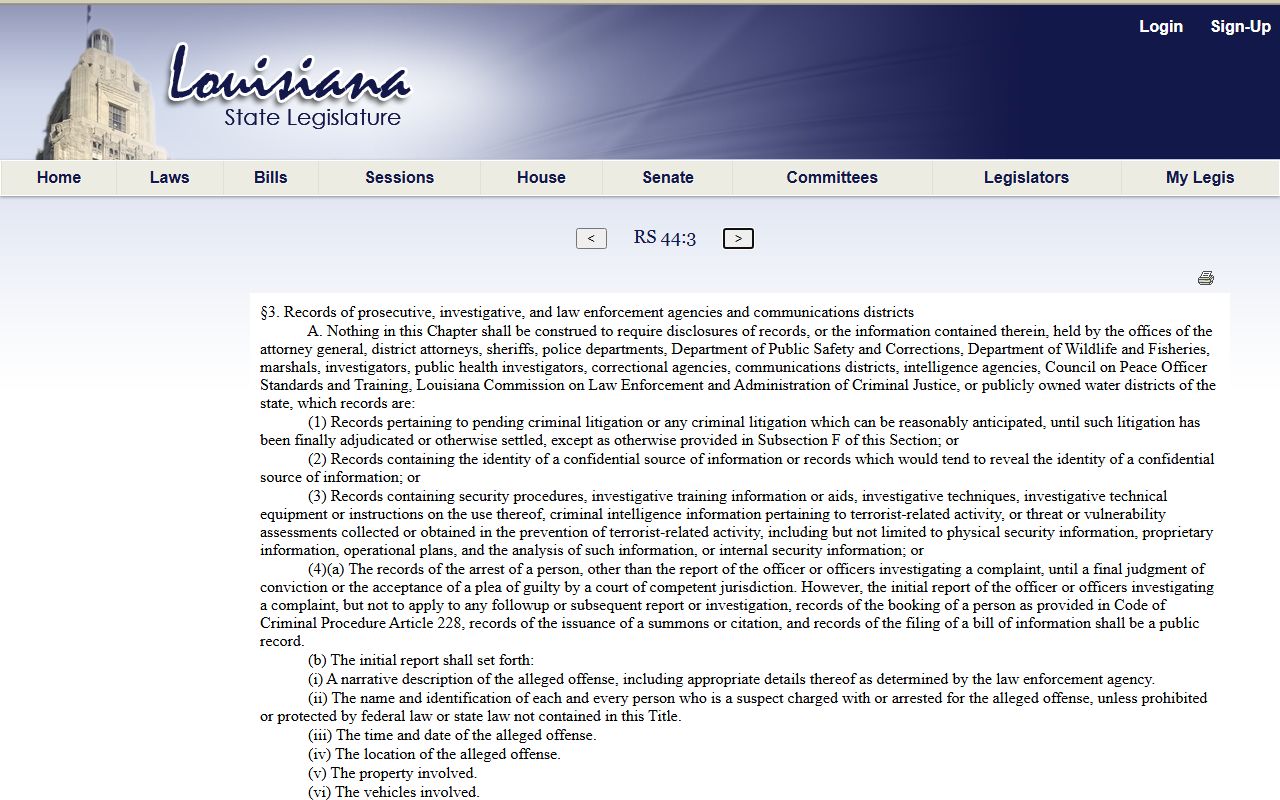
That statute explains why an initial report or charging document may be treated differently from an active investigative file.
Pointe Coupee Charge Status
One arrest can lead to no filed charge, one filed charge, or several counts. Filed counts can also change as the case moves through arraignment, motions, plea talks, and trial. A charge status is best read by count, not just by case number, because one count may be dismissed while another count ends in a plea or sentence.
| Status | Meaning in a Court Charge Record | What to Check |
|---|---|---|
| Pending | The charge is still open or has no final public outcome shown. | Next court date, motion activity, bond, or warrant notes. |
| Amended or reduced | The filed count changed, often by prosecutor action or plea agreement. | Original count, amended count, statute citation, and minute entry. |
| Dismissed | The count was ended without a conviction on that count. | Whether other counts in the same case remain active. |
| Nolle prosequi | The prosecutor declined to proceed on that charge. | The minute or order showing the DA action. |
| Disposed | The charge reached a final charge-level outcome. | Plea, verdict, sentence, fine, probation, or costs. |
Note: A charge-level dismissal does not always mean the whole case was dismissed.
Pointe Coupee Charges vs Convictions
A charge is an accusation filed in court. A conviction is a later outcome based on a guilty plea, verdict, or other qualifying disposition. The distinction matters for Pointe Coupee arrest records because a person can be arrested and charged, then later have charges reduced, dismissed, expunged from public access, or resolved without a conviction on every count.
| Point | Charge | Conviction |
|---|---|---|
| Stage | Filed after arrest or citation. | Reached after plea, verdict, or qualifying disposition. |
| Record source | Charging document, docket, minutes, and case entries. | Disposition, sentence, judgment, and related minutes. |
| Meaning | An accusation to answer in court. | A legal outcome finding guilt or accepting a guilty plea. |
| Search risk | Can appear even when later dropped. | Should be verified against the final court record. |
Pointe Coupee Arrest Record Limits
Louisiana Public Records Law supports access to public records, but law-enforcement records have special rules. R.S. 44:3 is the key statute for sheriff-held arrest and investigative material because it protects certain active investigative and prosecutive records while allowing access to specified categories such as some booking records, summons or citation records, bills of information, and initial reports within statutory limits.
For sheriff copies, the PCPSO request form is sent to the Civil Division by mail, in person, fax, or email. The form lists P.O. Box 248, New Roads, LA 70760, in-person submission at 128 Court Street, New Roads, fax 225-638-5420, and PublicRecords@pcpso.org. It also states that payment is required before copying and that public records will not be transmitted by email for security reasons.
| Item | PCPSO Amount |
|---|---|
| Copied or scanned page | $1.00 per page |
| Audio or video media on CD or USB | $10.00 |
| Certification | $5.00 |
| Incident or accident report | $10.00 |
Pointe Coupee Expunged Arrest Records
Expungement in Louisiana removes eligible records from public access, but the record is not destroyed. The Code of Criminal Procedure Article 971 source explains that effect. A person with a Pointe Coupee arrest, charge, or conviction issue should gather arrest identifiers, case numbers, charge and disposition details, then use the local 18th JDA expungement guidance and the Clerk or court filing process.
The Article 971 source image documents the public-access effect of expungement.
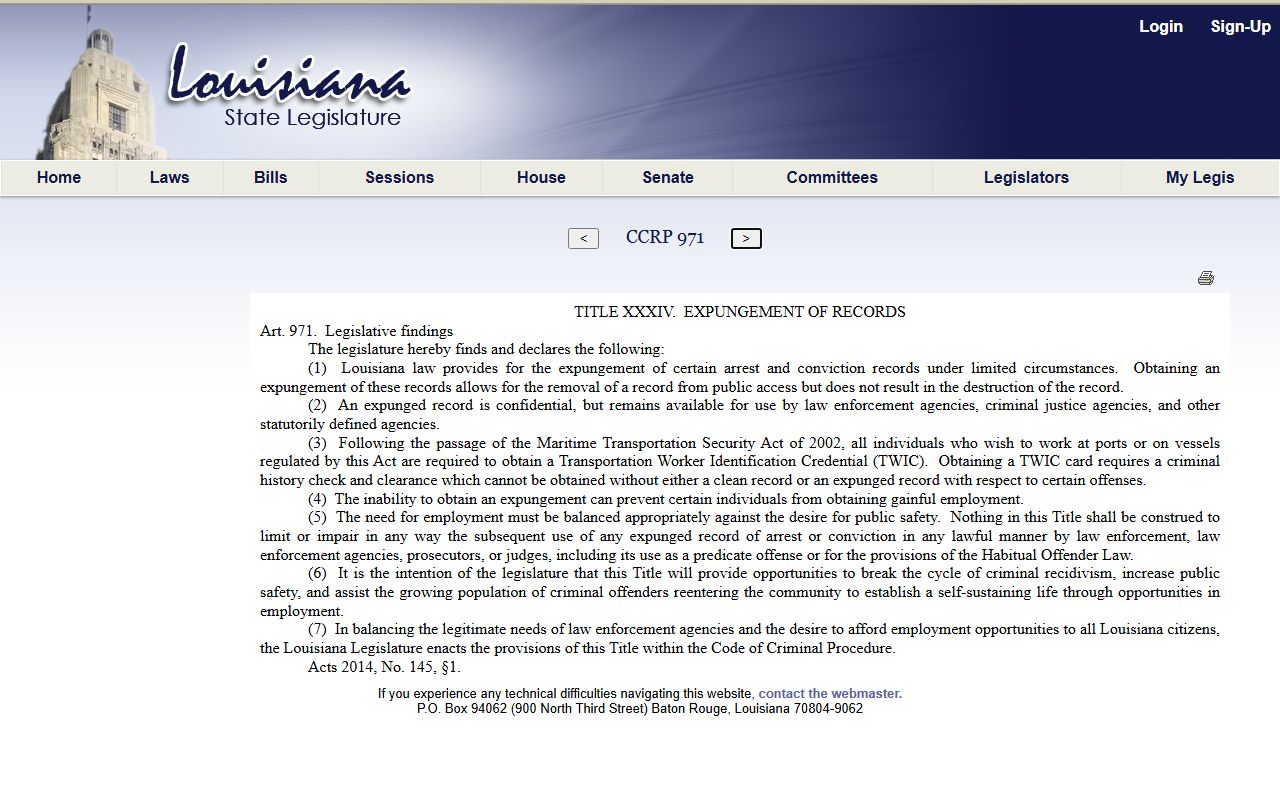
For a public search, the practical result is simple: an expunged record may stop appearing even though authorized criminal justice agencies can still access it.
| Record Treatment | Public Access | Official Caveat |
|---|---|---|
| Sealed | Restricted from ordinary public view. | Access depends on order, statute, or agency authority. |
| Expunged | Removed from public access. | Not destroyed under Louisiana expungement law. |
| Automated expungement | May apply to qualifying records under state mechanics. | Eligibility and timing depend on the statutory process. |
The Louisiana Article 985.2 source page covers automated expungement mechanics for certain qualifying records.
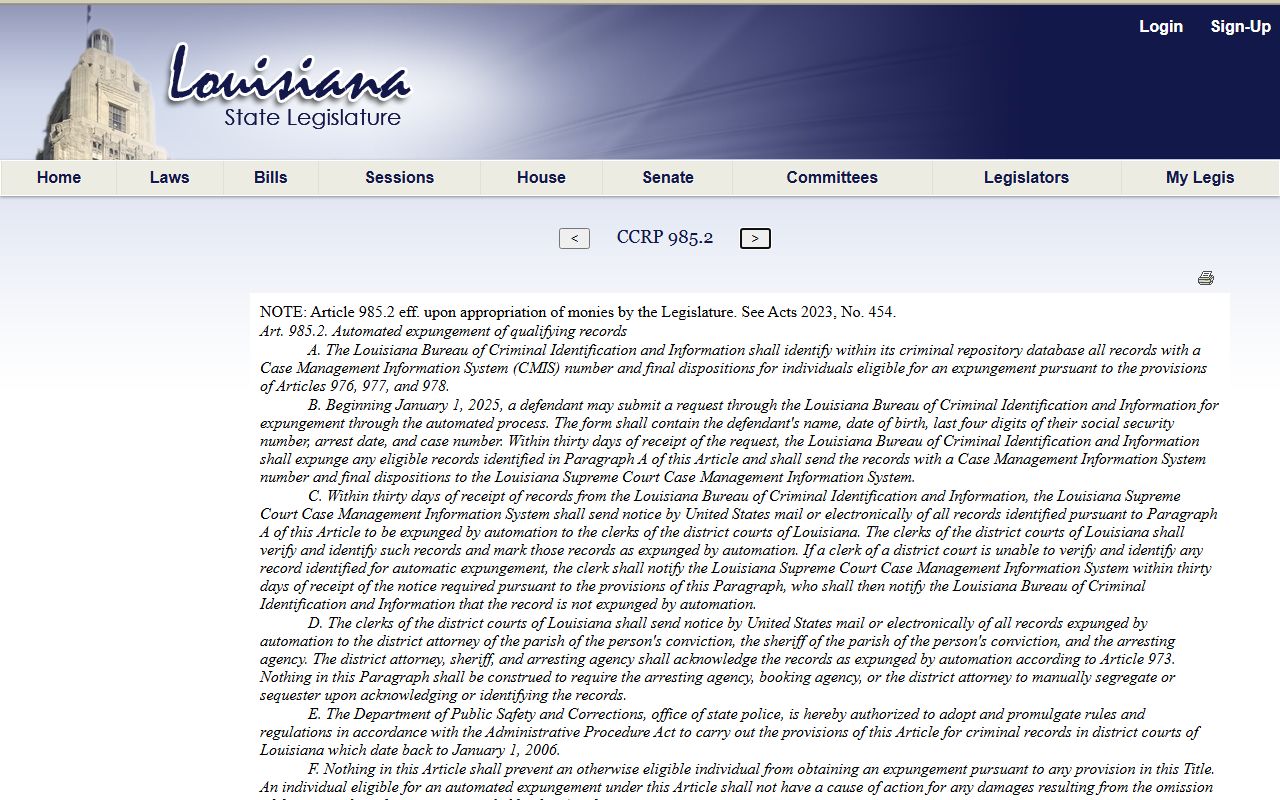
That state process should be treated as a legal eligibility issue, not as proof that every old arrest or charge will vanish from public search.
Pointe Coupee Court Charges After Arrest
The DA's role is central to court charges after arrest. The 18th JDA identifies District Attorney Tony Clayton and lists Pointe Coupee assistant district attorneys for Division A misdemeanors, juveniles, and felonies. The office address is Pointe Coupee Parish Courthouse, 201 E. Main Street, New Roads, LA 70760, phone 225-638-5531, fax 225-638-5546, and mailing address P.O. Box 754, New Roads, LA 70760.
The DA role page is the official source for the prosecutor's felony, misdemeanor, and traffic role.

That source is why traffic and misdemeanor charges cannot be separated from the 18th JDA access path in Pointe Coupee Parish.
Restricted Pointe Coupee Charge Records
Some charge records are not open in the same way as ordinary adult criminal court files. Juvenile court records are confidential under Louisiana Children's Code Article 412 except for traffic violations and statutory disclosures. Adoption and mental health proceedings should not be treated as public criminal records. Clerk civil and criminal warnings also require filers to keep private data out of public filings, including Social Security digits, tax IDs, state IDs, driver license numbers, financial account numbers, full dates of birth, and protected information.
Active investigations and prosecutive work may also be withheld under R.S. 44:3. Redaction does not always mean a record is missing. It may mean the Clerk, sheriff, court, or prosecutor is applying a public-records exception, expungement rule, privacy rule, or juvenile confidentiality rule.